
For a lot of transgender women, hair is a daily reminder. It shows up in the mirror, in photos, and in every close-up conversation. Shaving and covering up eat real time and energy, and having a plan to move past it can be a huge relief. At Nüde Laser, we welcome everyone, and we have years of experience treating transgender clients. This guide to laser hair removal for transgender women covers the face and body in plain language. Our women’s laser hair removal page lists every area we treat.
A Welcoming First Visit
You should feel comfortable from the second you walk in. Our team accepts all clients, and we’ve treated transgender women for years. Your consultation is private. You’ll be treated with respect, and nobody will ask you to explain why you’re here.
Come with your goals, and we’ll build the plan around them. If there’s a name or pronoun you’d like us to use, tell us. If something would make the visit easier, like a quiet time of day, say that too.
Facial Hair Reduction Plans
The face is where many clients begin. Beard hair can be dense, and it grows in different stages at the same time, which is why a series takes patience. Most facial areas need 8 to 12 treatments for permanent hair reduction. Your provider will give you a more personal estimate after seeing your skin and hair.
Clients often start with the chin and upper lip, then add the jawline and cheeks. If you’d rather have everything on one calendar, our full face laser plans put the whole face on a single schedule. Between sessions, shave instead of plucking or waxing. The follicle has to stay in place so the laser can treat it next time.
Hormone Therapy and Your Results
If you’re on hormone therapy, tell your provider at your consultation. Hormones can change how hair grows over time, but the laser works on the follicle, so the two are separate. Your prescriber leads your hormone plan. Please don’t stop or change a prescription to fit a laser schedule.
Your body keeps changing, and your hair can too. That’s why some clients come back for touch-ups later. Maintenance sessions, usually 2 to 4 times a year depending on the person, take care of new growth. For background on how the laser finds hair, the American Academy of Dermatology’s overview of laser hair removal explains that it works on pigment.
Body Areas and Full Body Plans
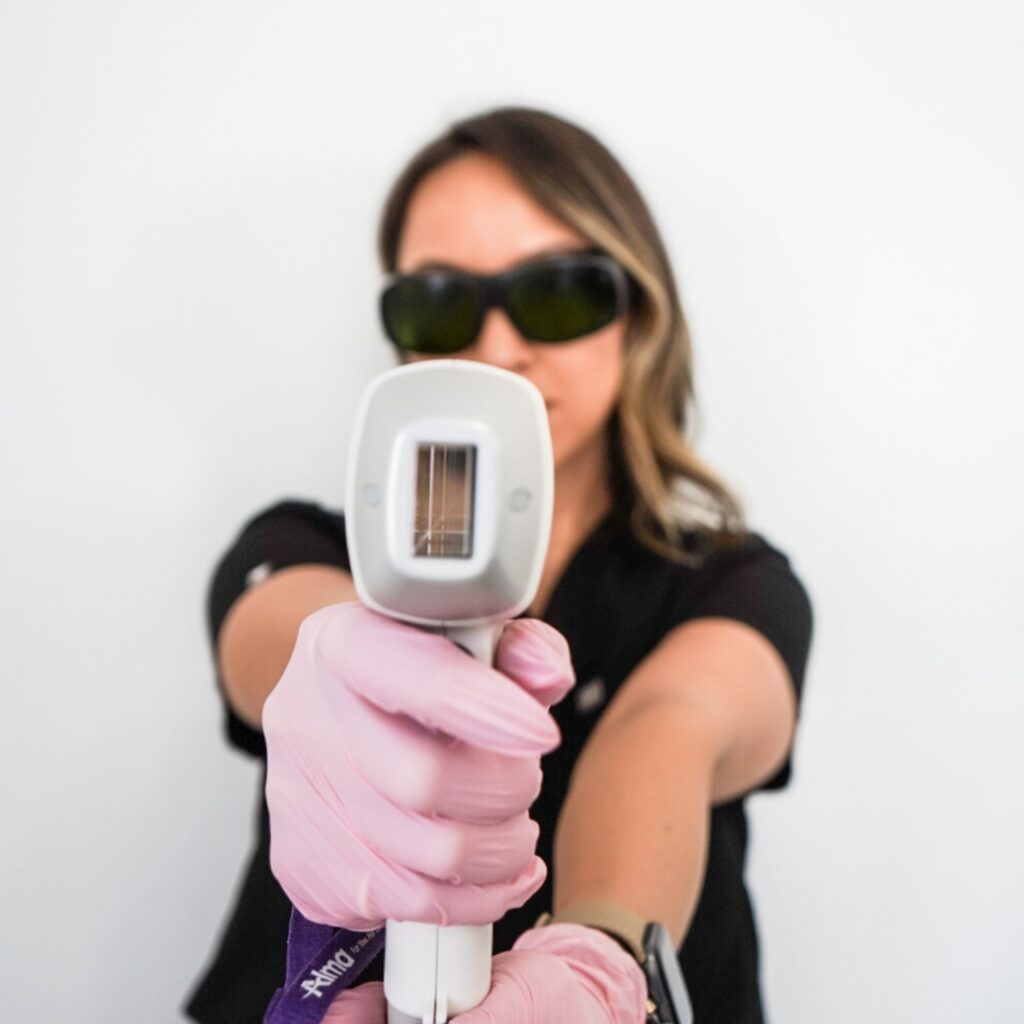
Many clients also treat the chest, back, arms, underarms, bikini area and legs. The Soprano Titanium handpiece covers each zone quickly, so areas can be combined and run on one calendar. Our full body treatment plans show how that works.
Most areas take 8 to 12 treatments, and legs are often 8 to 10. You don’t have to do it all at once. Start with whatever bothers you most, then add more areas when you feel like it.
Gray Hairs and When Electrolysis Fits
Laser looks for color in the hair. So it works best on dark hair and can’t treat gray, white or very light hairs. If some of yours have no pigment, your provider will say so honestly. Electrolysis is a separate treatment some people use for those hairs. Nüde doesn’t offer it.
In most cases, treating dark hairs sooner beats waiting. Many clients find laser clears most of what they dislike and leaves only a few light hairs to handle another way.
Comfort Across Every Skin Tone
The Soprano Titanium is built for Fitzpatrick skin types I through VI, and your provider adjusts it to your skin before each session. It warms the follicle gradually as it sweeps across the skin, and the cooling tip keeps things comfortable. Most clients describe mild warmth, and the treatment is virtually painless.
The face is more sensitive than the legs, so tell your provider how it feels. They can slow down or change settings at any point.
Setting Up Your Plan
A good plan starts with your priorities, not ours. Some clients want the face done first because it’s the one place they can’t cover. Others begin with the body and add the face later. Both are fine. Your provider will map out each area, give you a rough sense of how many visits to expect, and keep the schedule realistic around your life.
If your budget is tight, ask about pacing. Starting with one area and adding another every few months works well for many people.
Privacy and Comfort During Treatment
Treatment happens in a private room, and only the area being treated needs to be uncovered. If you need a pause at any point, say so.
Tell us what helps. Some clients like a quick walk-through of each step before it starts. Others prefer to get on with it. Either way, you’re the one running the session.
What Real Progress Looks Like
Early on, shaving gets less frequent. After a few sessions, regrowth looks thinner and patchier. Later, most clients find they’re shaving once in a while instead of every morning. Hair on the face doesn’t all drop at once, so you’ll see changes in stages.
Be patient with the middle of the series. It’s the part where it feels like nothing’s happening, and it’s also when the biggest change is quietly building up.
Questions to Ask Any Laser Provider
Before you commit anywhere, ask which device they use and whether it’s cleared for your skin type. Ask how they handle gray or white hairs. Ask who does the treatment and how long they’ve done it. And pay attention to how the consultation feels. If you’re listened to and nobody makes it awkward, that tells you plenty.
Frequently Asked Questions
How many sessions will I need for facial hair?
Most facial areas take 8 to 12 treatments. Your provider will give you a personal estimate at your consultation.
Does hormone therapy change my results?
Hormones can change how hair grows over time, but laser works on the follicle. Tell your provider about your hormone therapy, and check with your prescriber about anything related to your medication.
Should I choose laser or electrolysis for my face?
Laser works on dark hair. Electrolysis is an option some people choose for gray, white or very light hairs. Nüde offers laser only.
Is it covered by insurance?
Coverage varies by plan, so check with your insurer. Nüde doesn’t accept HSA or FSA cards.
Final Thoughts
Laser hair removal can take a daily chore off your list and hand your mornings back. What matters most is working with a team that welcomes you, listens, and has done this many times before. Nüde has.
Next Steps for Transgender Clients
Before you come in, make a note of your hormone therapy, since your provider will ask. Decide which areas you’d like to start with, face, body or both. Stop plucking and waxing, and shave instead so the follicle stays in place. Bring any questions you have. Nothing is off limits. Then book a private consultation, and the Nüde team will take it from there.
Explore our main laser hair removal page, then Text Our Team or Book Appointment.
