
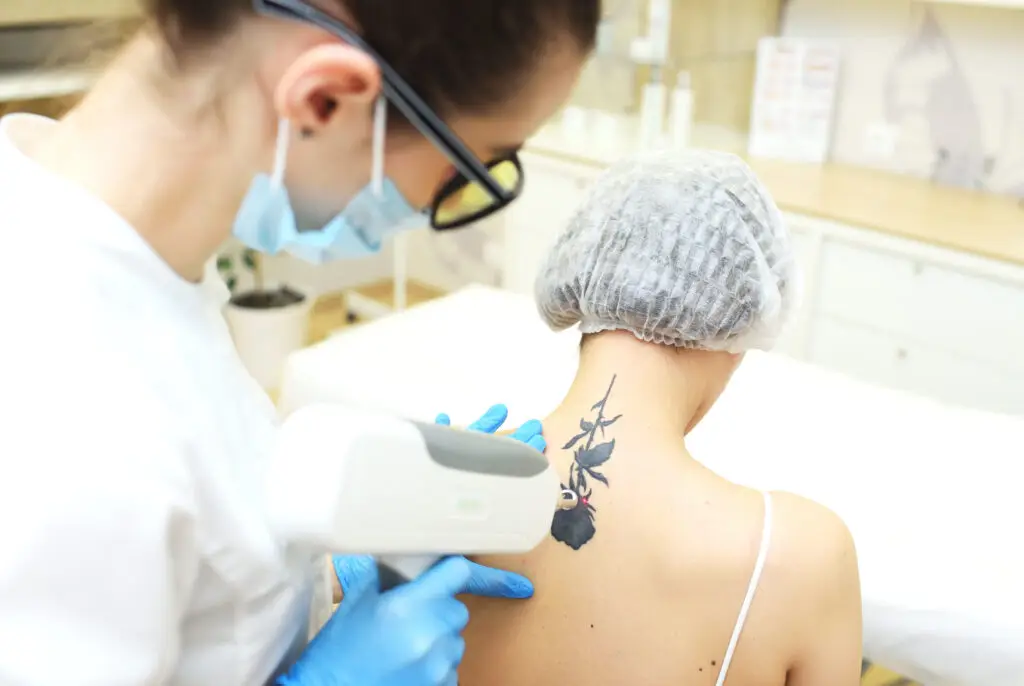
The short answer is no. If you’ve been wondering, can you get Laser Hair Removal in Tampa over a tattoo, the treatment can’t run directly over ink, and any provider who says otherwise is one to walk away from. The full answer is much better news: laser and tattoos coexist just fine, because providers treat around ink every single day.
In a city as tattooed as Tampa, this isn’t an edge case. A huge share of laser clients bring at least one piece to the consultation, from a small ankle design to a full sleeve, and every one of them can still get treated. The tattoo just gets a protected zone of its own.
Here’s why the ink itself is off limits, how providers work around it, and the timing move worth knowing if more ink is in your future.
Why Lasers and Tattoo Ink Don’t Mix
Laser Hair Removal works by targeting pigment. The light energy seeks out the melanin in your hair, travels down the shaft, and heats the follicle. That selectivity is the whole trick: dark pigment absorbs the energy, and everything around it stays cool. The American Academy of Dermatology’s laser hair removal FAQs describe the same pigment-targeting principle.
Now put a tattoo in the beam’s path. Tattoo ink is pigment too, sitting in the skin at a density far beyond anything a hair follicle offers. The laser can’t tell the difference between the melanin it wants and the ink it should ignore, so the energy dumps into the tattoo instead.
Two bad things follow from that. Your skin takes the heat, which can mean burns and blistering over the tattooed area. And your artwork takes the hit, since the concentrated energy can blur lines and fade color in ways no touch-up artist enjoys fixing.
One more thing worth knowing: every tattoo counts the same. Black ink, color, fine line, heavy traditional, a decades-old faded piece, or last year’s cover-up, the laser treats all of it as pigment to avoid. Age and style change how a tattoo looks. They don’t change the physics.
None of this is a flaw in modern equipment. The whole treatment depends on the laser being selective about which pigment it heats, a principle the StatPearls clinical review of Laser Hair Removal covers in detail, and dense ink defeats that selectivity no matter which system is firing. The fix isn’t a better machine, it’s a provider who maps around the ink properly.
The Good News: Laser and Tattoos Coexist Fine
Treating around tattoos is standard practice, not a special accommodation. Here’s what it looks like in a well-run session.
At your consultation, your provider maps the treatment zone and notes every tattoo inside it. During treatment, each tattoo gets a safety border, a small margin of untreated skin around the ink, and the tattoo itself is covered or the handpiece simply routes around it. The laser never touches the artwork.
Expect the tattoo conversation to happen early. Your provider looks at each piece, notes where it sits relative to the zones you want treated, and gives you an honest read on how much of the area is treatable. For most clients the answer is nearly all of it.
The honest trade-off: hair inside the tattoo and in that thin border keeps growing, since the laser never treats it. Most clients shave that small strip in seconds and never think about it again, and a good provider will blend the treated area so the transition isn’t noticeable.
Sleeves and arm sessions. Full and half sleeve clients get everything outside the ink treated normally. If the sleeve covers most of the arm, your provider will be honest about how much treatable skin is actually left in that zone.
Back pieces and back treatments. Large back tattoos sit inside one of the most requested treatment areas. The piece gets bordered off, and the rest of the back proceeds exactly as it would for anyone else.
Small tattoos on legs and bikini zones. The easiest case of all. A small design costs you a few square inches of treatment area and nothing else, and sessions run at full speed around it.
Timing It Right: New Tattoos, Future Tattoos, and Laser
Laser near a new tattoo is where timing matters most. Fresh ink is an open wound while it heals, and treatment anywhere nearby waits until the tattoo is fully healed and settled. There’s no universal week count worth quoting, because healing varies by piece, placement, and person. Your provider and your tattoo artist together are the right source for your timeline.
Planning new ink in an area you also want treated? Here’s the sequencing move almost nobody states plainly: finish the laser series first, then get the tattoo. The order solves everything. Treated skin means no hair growing through your future artwork, no safety border eating into the design, and no scheduling conflicts between healing windows and sessions.
Tampa adds one habit that serves both your skin and your ink: daily sunscreen. Treated areas need SPF between sessions anyway, and tattoo artists preach the same product for keeping ink from fading under Florida sun. One bottle, two jobs, zero excuses.
A full series is roughly a year of calendar time. Sessions start every 6 weeks and stretch to every 8 as growth thins, and most areas need 8 to 12 of them, with touch-ups 2 to 4 times a year afterward. If a big piece is on your wish list, starting laser now is how both plans fit.
Every price is published on our pricing page, including the Unlimited 1 Year option, which costs exactly seven single sessions for any area.
Frequently Asked Questions
What happens if the laser hits a tattoo?
The ink absorbs the energy meant for hair pigment, which concentrates heat in the tattooed skin. That can mean burns or blistering, and the tattoo itself can end up blurred or faded. It’s why providers cover tattoos and keep a safety border around them, and why the ink is never treated directly.
How close to a tattoo can the laser get?
Providers keep a small margin of untreated skin around the ink, and the exact size of that border is your provider’s call based on the equipment, the settings, and the piece itself. Hair inside that border keeps growing and is easily shaved. Everything outside it gets treated normally.
Will Laser Hair Removal fade my tattoo?
Not if it’s done properly, because the laser never touches the ink. Fading and blurring are risks only when energy is fired directly over a tattoo, which is exactly what the mapping, covering, and border process exists to prevent. Bring every tattoo up at your consultation, including small ones, so nothing gets missed.
Is laser tattoo removal the same thing?
No, and the confusion is understandable since both involve lasers and pigment. Laser tattoo removal uses different equipment and settings designed to break up ink particles so the body can clear them. Laser Hair Removal targets the pigment in hair follicles, so one removes artwork on purpose and the other is engineered to leave it alone.
Can the hair growing inside my tattoo be removed at all?
Not with laser, since treating it means firing over ink. If hair inside a tattoo genuinely bothers you, electrolysis is the method to ask about, because it treats follicles one at a time with no light energy involved. For most people, shaving the small tattooed area is the practical answer.
Do I need to prep tattooed skin any differently before a session?
No special routine needed. Shave the treatment area the day before as usual, including over the tattoo if hair grows through it, since shaving doesn’t harm settled ink. Skip self-tanner near the zone, arrive with clean skin, and mention every tattoo up front so your provider can handle the covering and mapping on the day.
Next Steps for Tattooed (and Future-Tattooed) Skin
If you have ink and want laser, the path is simple:
- Bring every tattoo up at your consultation, even the small ones
- Mention any tattoos you’re planning, so sequencing gets built into your plan
- Let new ink heal fully before starting laser anywhere nearby
- If a big piece is coming, consider finishing your laser series first
Tattooed clients are treated at our Hyde Park studio every week, and the mapping conversation takes minutes rather than derailing the appointment. Book a free consultation and a licensed laser therapist will walk your ink with you, mark what’s treatable, and give you a realistic session count for the rest of the area. Protocols here are set by Jessica, our owner, Medical Aesthetician, and Laser Therapist, and mapping around ink is part of them rather than an exception to them.
