
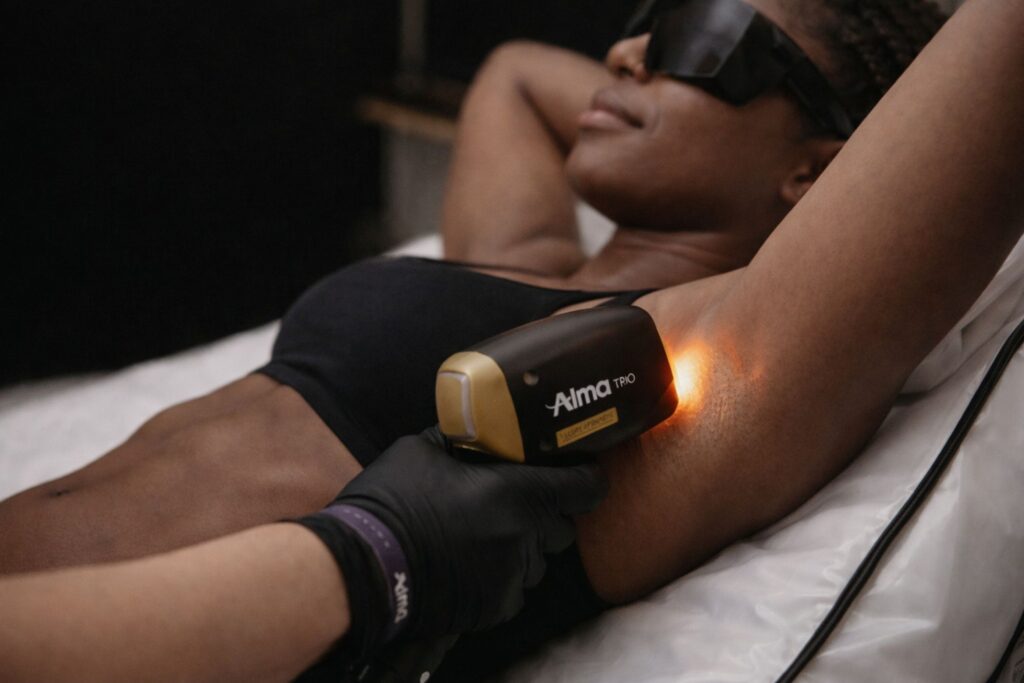
Tampa is known for its tank top weather. So when you start choosing sleeves over tank tops because your underarms look dark and shadowy, it can be really frustrating. Laser hair removal for dark underarms is one of the most searched questions on this topic, and the honest answer depends on what’s causing the darkness. It could be the hair itself, which is exactly what laser hair removal targets. It could be the skin reacting to years of shaving. In some cases, it’s something a doctor should look at first. If you feel stinging and irritation with every pass of the razor, it helps to understand how underarm laser sessions work before you spend the money.
The Three Most Common Reasons for Dark Underarms
There are three usual reasons for dark underarms, and many people have more than one at a time.
Stubble shadow. Underarm hair is coarse and dark. Even right after a close shave, the cut ends sit just under the skin and show through as a gray or blue tint.
Shaving irritation. Over time, the repeated scrape of a razor can leave the skin darker than it used to be.
Products and friction. Tight sleeves, sweat and some deodorants all irritate freshly shaved skin, and together they keep the irritation going.
Tampa’s humidity makes all of this worse. People sweat a lot here, and that sweat sits in the underarm fold for much of the day.
At Nüde Laser, the first step in a dark underarm consultation is working out which of these is going on, because the answer decides what laser can realistically do for you.
Shaving Irritation and Dark Patches
The medical name for darkening after irritation is post-inflammatory hyperpigmentation. The skin responds to repeated injury by producing extra melanin, and that pigment can stay long after the irritation has healed.
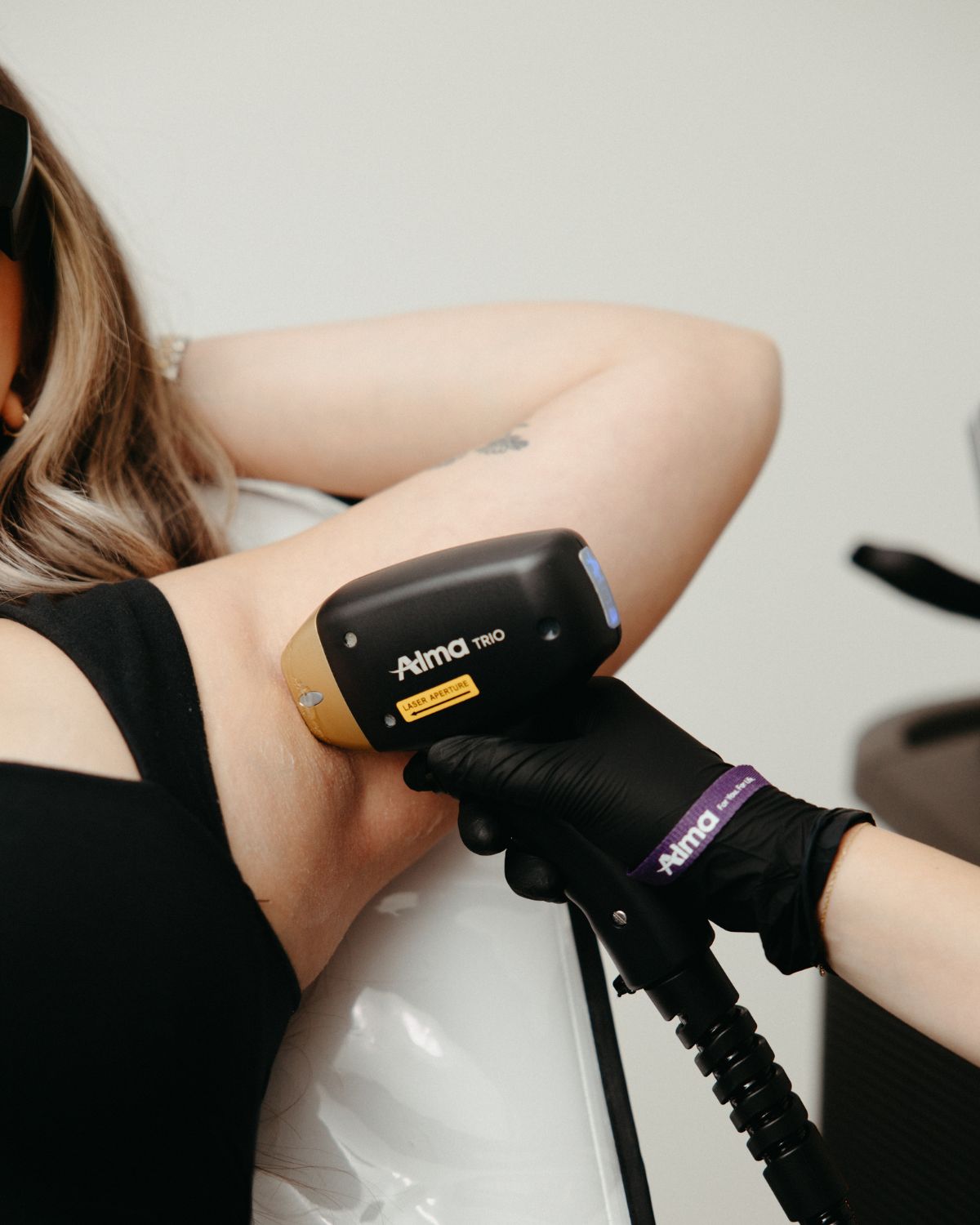
In the underarm, the injury is small, constant and repeated. You shave, put deodorant on freshly shaved skin, sweat through a humid workday, and shave again a few days later. The skin never fully heals, which is why dark patches stay and can even get worse.
Laser can help with this indirectly. The laser doesn’t lighten skin. What it does is reduce underarm hair, so the razor stops coming back every few days. With less shaving, the skin finally gets time to recover, and many clients see those patches fade gradually over the course of their sessions. Results vary from person to person, and your provider can give you a realistic picture.
Repeat ingrown hairs can leave marks too. Fewer hairs mean fewer ingrowns and fewer new marks on the skin.
Dark Skin After Laser Is Uncommon and Manageable
Some people worry that laser hair removal will darken their underarms. Temporary color changes are a known side effect of laser treatment, and they’re more likely when the device or settings don’t suit the person’s skin.
That’s why the device matters, especially for deeper skin tones. Older single-wavelength lasers could mistake the pigment in the skin for the pigment in the hair. Modern systems that carry the 1064nm wavelength are much better at passing through surface pigment to reach the follicle. For more on this, see our post on laser for deeper skin tones.
The Soprano Titanium is built to treat Fitzpatrick skin types I through VI, and settings are adjusted to your skin before every session. If you’ve had laser or IPL hair removal somewhere else and noticed dark spots afterward, mention it at your consultation so your provider can plan around it.
Darkness That Needs a Doctor First
Not all dark underarms come from shaving. A condition called acanthosis nigricans causes skin in body folds to turn darker and thicker, with a velvety feel. It often shows up on the neck, groin and underarms, and it can be linked to insulin resistance.
The American Academy of Dermatology’s overview of acanthosis nigricans describes the signs and explains why a doctor visit matters. Laser hair removal won’t help with it, and it isn’t something to manage on your own.
See a doctor or dermatologist before booking laser if you notice:
- Skin that is darker and also feels thick or velvety
- Darkening that spreads to the neck, groin or other folds
- Changes that appear quickly or keep getting worse
- Itching, odor or skin tags in the area
Once a doctor has looked at it, your laser provider can talk through whether hair reduction still makes sense alongside their care.
Underarm Treatment at a Glance
The underarms are one of the quickest areas to treat. Most appointments take about 15 minutes, so plenty of clients fit them into a lunch break.
Coarse, dark underarm hair is a strong target for the laser, so this area tends to respond well. Most clients need 8 to 12 treatments for permanent hair reduction, and maintenance touch-ups 2 to 4 times a year, depending on the person, can help afterward. Your provider will give you a personal estimate at your consultation, and you can see underarm pricing ahead of time.
The Soprano Titanium uses a sweeping in-motion technique with built-in cooling, which keeps the area comfortable. Most clients describe the feeling as mild warmth. It’s virtually painless for most people, which matters in a spot already sensitive from shaving and deodorant.
Because the underarms are so small, they pair easily with other areas like the bikini line, Brazilian or legs.
Your first visit starts with a conversation about your goals before any laser work is done. Your provider looks at your skin, the hair and the darker areas, asks how long they’ve been there, and checks whether anything needs a doctor’s opinion first. From there, you’ll get a personal plan for the hair and an honest read on what may happen to the darker areas as shaving drops off. Sessions are spaced several weeks apart so the laser can catch each hair in its active growth phase.
Gentle Underarm Care Between Sessions
Between visits, a few habits help you get the best results:
- Shave, don’t wax or pluck. The laser needs the hair root in place, so waxing and plucking work against your sessions.
- Shave with the grain to cut down on nicks.
- Give your skin a break before applying deodorant if it stings.
- Wear looser clothes on hot days to cut friction.
- Use sunscreen if you’ll be outside or on the water, so the treated area doesn’t burn.
For dark spots in general, the AAD’s tips to fade dark spots are a good place to start. Your provider will also give you instructions for before and after each session.
Questions to Ask Any Laser Provider
If dark underarms are part of why you’re considering laser, these questions will help you compare providers:
- Which device do you use, and is it cleared for my skin type? Look for a specific device name and a Fitzpatrick range.
- Can you tell what’s causing my darkening? A good provider can tell stubble shadow from irritation, and knows when something needs a doctor.
- What results are realistic for the dark spots? Be wary of anyone who promises the skin will lighten.
- How do you adjust settings for my skin type? The answer should include a skin check at every visit.
Clear, comfortable answers to these questions are a good sign.
Frequently Asked Questions
Does laser hair removal darken armpits?
It usually doesn’t. Temporary darkening is a possible side effect of any laser treatment, and the risk goes down with a device and settings matched to your skin tone. Tell your provider if you’ve had dark spots after past treatments.
Will laser lighten my underarms?
Laser doesn’t lighten skin. It can remove the stubble shadow and cut the shaving irritation behind many dark patches, and many clients see those patches fade over time once shaving drops off.
Will laser hair removal lighten my bikini area?
It works the same way as the underarms. Bikini darkness from shaving irritation and stubble often improves once shaving drops off, but laser won’t change your natural skin color. Darkness that is velvety or spreading should be checked by a doctor.
Next Steps for Clients With Dark Underarms
If the shadow bothers you too, here’s what to do:
- Stop waxing and plucking. Switch to shaving so the follicle stays in place for treatment.
- Note how long the darkness has been there. The timing helps your provider, or your doctor, read the situation.
- Feel the skin. If it feels velvety or thick, see a doctor first.
- Take photos in natural light. They make it easier to track progress between sessions.
- Book a consultation. Your provider at Nüde will assess your skin and hair in person, explain how an underarm treatment plan would fit your routine, and answer any questions. For the bigger picture, our complete guide to laser hair removal in Tampa covers every area we treat.
Velvety or spreading darkness belongs with a doctor first. For everything else, knowing which kind of darkness you have is the most useful step before any treatment. Ready to start? Book Appointment.
