
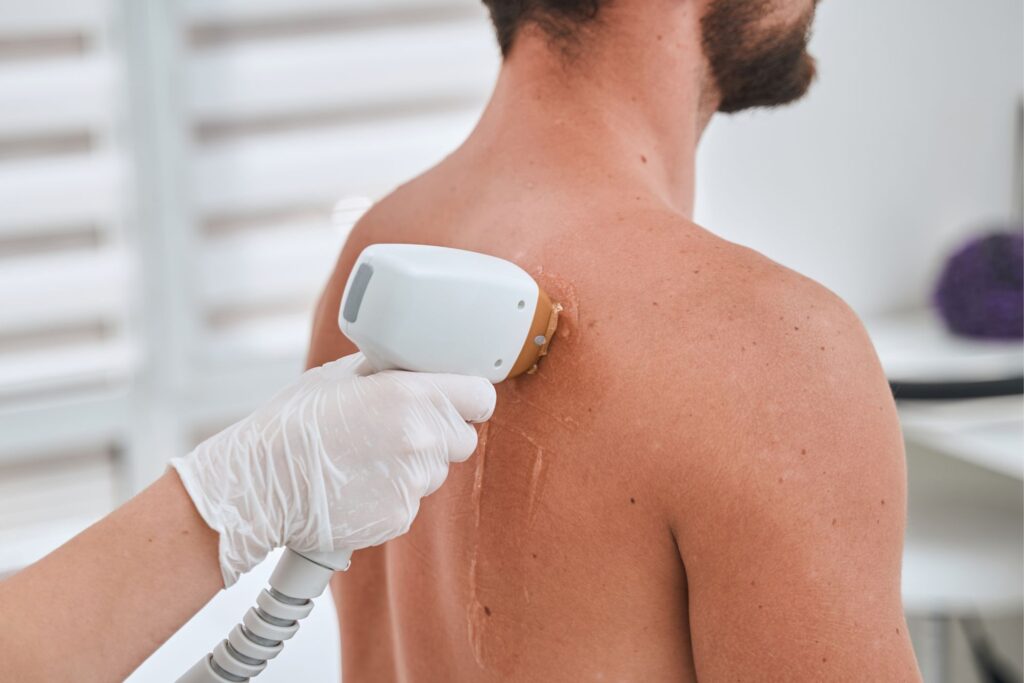
You’ve got a few moles on your legs, a scatter of freckles across your shoulders, and one worry: do they get in the way? Not really. Our team at Nüde Laser works around moles and freckles all the time. It does take a little care, because a laser is drawn to pigment. If you’re planning your legs, our full leg treatments page shows what a session looks like.
Moles Hold Extra Pigment
A laser looks for color. It homes in on the pigment inside a hair, and that’s how it reaches the follicle. A mole is a cluster of concentrated pigment, so it can soak up the laser’s energy the same way a dark hair does.
So moles need a little attention. At Nüde, your provider covers a mole when needed, which means the laser skips it and treats the hair around it. It’s a simple step, and a routine one for a trained provider.
Covering Moles During Treatment
If a mole sits in the treatment area, your provider covers it before treating the skin nearby. You don’t have to do anything. Do point out any mole you’re unsure about, especially a new one.
This is also a good moment to mention a mole that looks different from your others. Your provider isn’t a dermatologist and can’t diagnose a spot, but they can tell you it’s worth having someone look at it.
Freckles, Sun Spots and Birthmarks
Freckles and sun spots are flat patches of extra pigment, and they get the same careful handling. Light freckling usually isn’t a problem, and your provider adjusts as they move across the area.
Laser hair removal won’t remove or lighten freckles, sun spots or birthmarks. It’s built to reduce hair. If a spot worries you, a dermatologist is the right person to ask. The Soprano Titanium treats Fitzpatrick skin types I through VI, and your provider chooses settings for your skin before every session.
Hair Growing From a Mole
Lots of people have a hair or two growing out of a mole. Trimming it close is the safest default, and your provider can tell you what’s best for that particular spot.
Laser isn’t meant to remove the mole itself. Whether a mole should come off is a dermatologist’s decision. If a hair from a mole bothers you, bring it up at your consultation and we’ll talk through the options.
Mole Changes to Watch
Any change in a mole deserves a doctor’s attention, laser or no laser. The American Academy of Dermatology’s guide to mole symptoms describes the ABCDEs of melanoma: asymmetry, border, color, diameter and evolving. If a spot shows any of those signs, call a dermatologist right away.
Don’t wait for your laser visit. Get it checked first, and book once you have the all clear.
Your Consultation Skin Check
At your consultation, your provider looks over the area and asks about moles, freckles and tattoos before talking through your plan. Treatment over ink is its own topic, and our post on laser over a tattoo explains how it works.
If something looks unusual, you’ll hear it from us honestly. The AAD also has a moles overview if you’d like more background.
What Your Provider Looks For on Your Skin
Before treatment, your provider looks at the whole area, not just the hair. They check for moles, freckles, scars, tattoos and anything that looks irritated. They also look at how the skin and hair contrast, since that tells them how the laser will respond.
You can help. Before your visit, notice anything new or changed, and tell your provider about moles you’ve watched for years.
Prepping for a Mole-Friendly Session
Shave the area the day before and keep it clean and free of lotion. Don’t try to cover moles yourself with makeup, since your provider handles that. If a mole is raised and catches on the razor, tell us. We’ll work around it.
When to See a Dermatologist First
A mole that bleeds, itches, crusts or grows deserves a doctor visit before any cosmetic treatment. So does anything that makes you uneasy, though you can’t say why. Trust that instinct. A quick check costs little, and it gives you peace of mind going into your series.
Questions to Ask Any Laser Provider
Ask how they handle moles during treatment, and listen for a straight answer. Ask which device they use and whether it’s cleared for your skin type. Ask who does the treatment. And ask what they do when they see something they’re unsure about. A good provider will say they’d send you to a dermatologist, not guess.
A Note on Tattoos and Scars
Moles aren’t the only spots worth mentioning. Tattoos, scars and birthmarks all hold extra pigment or change how skin reacts. Tell your provider about each one at your consultation, and they’ll plan around them. Our approach is simple: show us everything, and we’ll treat what’s safe to treat.
Frequently Asked Questions
Can you laser over moles?
Your provider covers moles when needed, so the laser treats the hair around them and skips the mole itself.
Will laser remove my moles or freckles?
No. Laser hair removal reduces hair. It isn’t a treatment for moles, freckles or birthmarks.
Why does my mole look darker after laser?
If you notice any change in a mole, see a dermatologist.
Can I laser hair growing from a mole?
Trimming is the safe default. Ask your provider at your consultation about the best option for you.
Final Thoughts
Moles and freckles don’t stand in the way of laser hair removal. A careful provider covers what needs covering and treats the rest. If a mole has changed, get it checked first.
Next Steps for Clients With Moles or Freckles
If a mole has changed in size, shape or color, see a dermatologist before anything else. At your consultation, point out every mole, and we’ll cover them when needed. For hairs growing out of moles, trim them and skip the plucking and waxing. Then book your consultation, and your Nüde provider will look over your skin.
Learn more about our laser hair removal in Tampa, then Book Appointment.
